
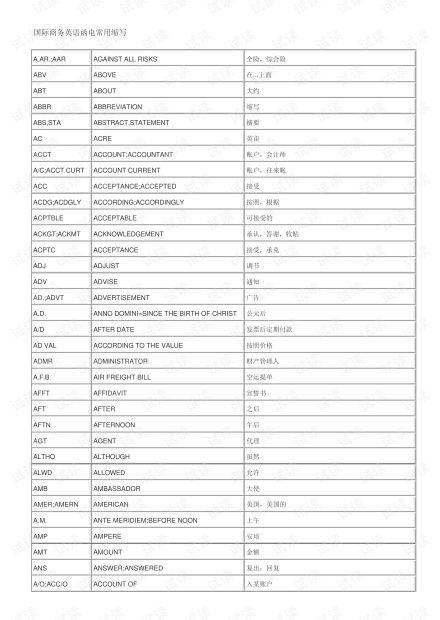
安装业务系统英文缩写,Introduction to Business System Abbreviations
Introduction to Business System Abbreviations
Understanding the various abbreviations used in business systems is crucial for effective communication and navigation within an organization. These abbreviations are often used to streamline processes and enhance efficiency. In this article, we will explore some of the most common business system abbreviations and their meanings.
ROI: Return on Investment
ROI, or Return on Investment, is a key performance indicator (KPI) used to evaluate the efficiency or profitability of an investment. It is calculated by dividing the net profit from the investment by its cost. The higher the ROI, the more efficient the investment is considered to be.
SKU: Stock Keeping Unit
SKU stands for Stock Keeping Unit, which is a unique identifier for each product in a store's inventory. SKUs are used to track inventory levels, manage pricing, and analyze sales data. They help businesses efficiently manage their product offerings and ensure accurate stock control.
API: Application Programming Interface
API, or Application Programming Interface, is a set of protocols and tools for building software applications. It allows different software applications to communicate with each other by defining the methods and data formats they should use. APIs are essential for integrating various systems and services.
LBS: Location-Based Services
LBS, or Location-Based Services, are applications that use a device's location to provide relevant information or services. These services can include navigation, local search, and location-based advertising. LBS enhances user experience by providing contextually relevant information.
ERP: Enterprise Resource Planning
ERP, or Enterprise Resource Planning, is a software system that integrates various business processes such as finance, human resources, supply chain, and customer relationship management. ERP systems help organizations streamline operations, improve efficiency, and gain better control over their resources.
EDB: Economic Database
EDB, or Economic Database, is a collection of data related to economic activities, such as financial transactions, market trends, and economic indicators. Economic databases are used for research, analysis, and decision-making by businesses, policymakers, and economists.
POC Testing: Proof of Concept
POC testing, or Proof of Concept, is a process used to validate the feasibility of a new product, service, or technology. It involves creating a small-scale version of the proposed solution to demonstrate its potential and gather feedback before full-scale implementation.
CRM: Customer Relationship Management
CRM, or Customer Relationship Management, is a strategy for managing all interactions with current and potential customers. CRM systems help businesses track customer interactions, manage sales leads, and improve customer satisfaction and loyalty.
ECIF: Enterprise Customer Information Framework
ECIF, or Enterprise Customer Information Framework, is a standardized approach to managing customer information across an organization. It ensures consistency and accuracy in customer data, enabling better customer service and decision-making.
OA: Office Automation
OA, or Office Automation, refers to the use of technology to streamline office processes and improve productivity. It includes various software applications such as email, document management, and collaboration tools.
WMS: Warehouse Management System
WMS, or Warehouse Management System, is a software application used to manage the day-to-day operations of a warehouse. It helps businesses optimize inventory levels, track goods, and improve overall warehouse efficiency.
MES: Manufacturing Execution System
MES, or Manufacturing Execution System, is a software application that provides real-time visibility and control of the manufacturing process. It helps manufacturers improve production efficiency, reduce costs, and ensure product quality.
EVA: Economic Value Added
EVA, or Economic Value Added, is a financial metric that measures the economic profit of a company. It is calculated by subtracting the cost of capital from the net operating profit after tax (NOPAT). EVA helps investors and managers assess the value created by a